2026 Labor & Welding Automation Report
Updated April 2026
For metal fabrication shops of all sizes, deciding between manual and robotic welding is no longer a simple question of cost. With growing labor shortages, tighter quality requirements, and increasing demand for faster turnaround times, many manufacturers are evaluating which approach—manual welding, robotic welding, or a hybrid of both—best fits their production environment. In this article, we break down the real differences between robotic and manual welding, including costs, speed, weld quality, labor considerations, safety, and ideal applications. By the end, you’ll have a clear understanding of which strategy makes the most sense for your shop.
| Feature | Manual Welding | Robotic Welding (2026 Standard) |
| Duty Cycle | ~40% (Fatigue/Breaks) | 85% – 95% |
| Consistency | Variable (Human factor) | High (vision/sensor-corrected) |
| Setup Time | Instant (for simple parts) | Moderate (Offline programming) |
| ROI Window | Low upfront / High OpEx | 6–24 Months |
1. Weld Quality and Consistency
Robotic Welding
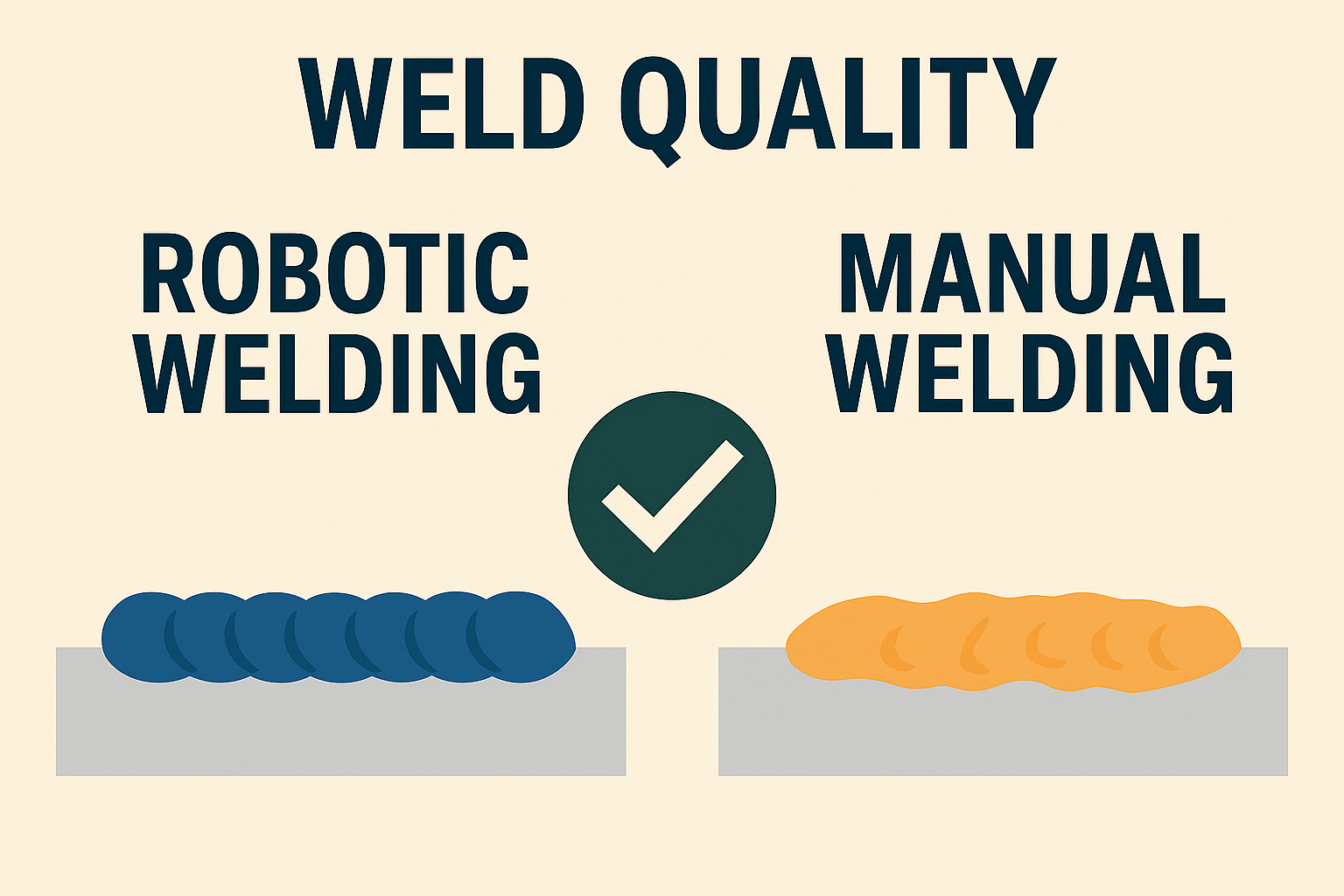
Robots excel in producing consistent, repeatable welds. Once a program is dialed in, a robotic welding cell can repeat the same motion thousands of times with minimal variation. This consistency is crucial for parts that will undergo structural load, fatigue testing, or regulatory inspections.
Best for:
- High‑volume production
- Tight tolerance requirements
- Welds with long, repeatable paths
Manual Welding
A skilled welder can adapt on the fly—adjusting technique to compensate for gap variation, heat distortion, or fit-up issues. This makes manual welding more flexible than automation, especially for complex or low‑volume work.
Best for:
- Custom one-off parts
- Repair work
- Complicated weldments requiring finesse
2. Productivity and Throughput
Robotic Welding
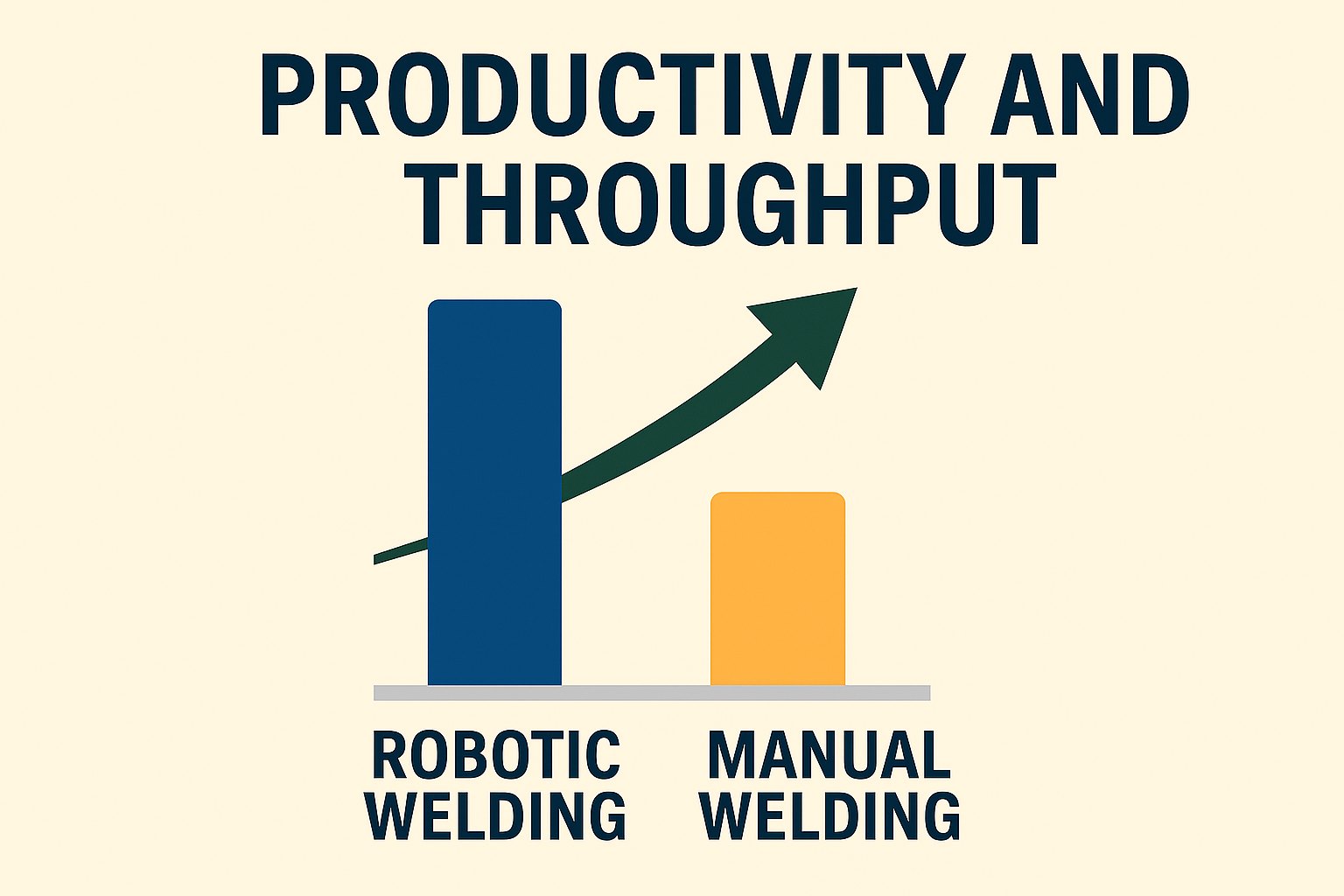
A robot doesn’t take breaks, get fatigued, or slow down. Once the torch is put to your weldments, productivity skyrockets. For the right part mix, a robotic welding system can outproduce manual welding by 3–5X or more, depending on joint type and application method.
Robots also allow offline programming, which keeps production running while new jobs are created or optimized for production.
Manual Welding
A skilled manual welder is highly capable, but human productivity naturally varies based on fatigue, shift length, and environmental conditions. Manual welding also requires more prep time between jobs, especially when dealing with fixtures, weldments and weld joint inconsistencies.
3. Labor Cost and Workforce Challenges
Robotic Welding
Robotic systems require an upfront investment, but long-term labor savings can be substantial. Robots reduce the need for large teams of welders and help shops retain their skilled welders for higher‑value tasks such as:
- Weld robot programming (online or offline)
- Weld quality inspection
- Weld tooling design
- Complex manual welds
For many fabricators facing hiring shortages, automation is a viable alternative to labor uncertainty.
Manual Welding
Manual welding remains essential, but finding and retaining skilled welders is increasingly difficult. Labor costs continue to rise, and onboarding new welders can take months. For shops relying heavily on manual welding, capacity often becomes limited by workforce availability rather than equipment.
4. Safety and Work Environment
Robotic Welding
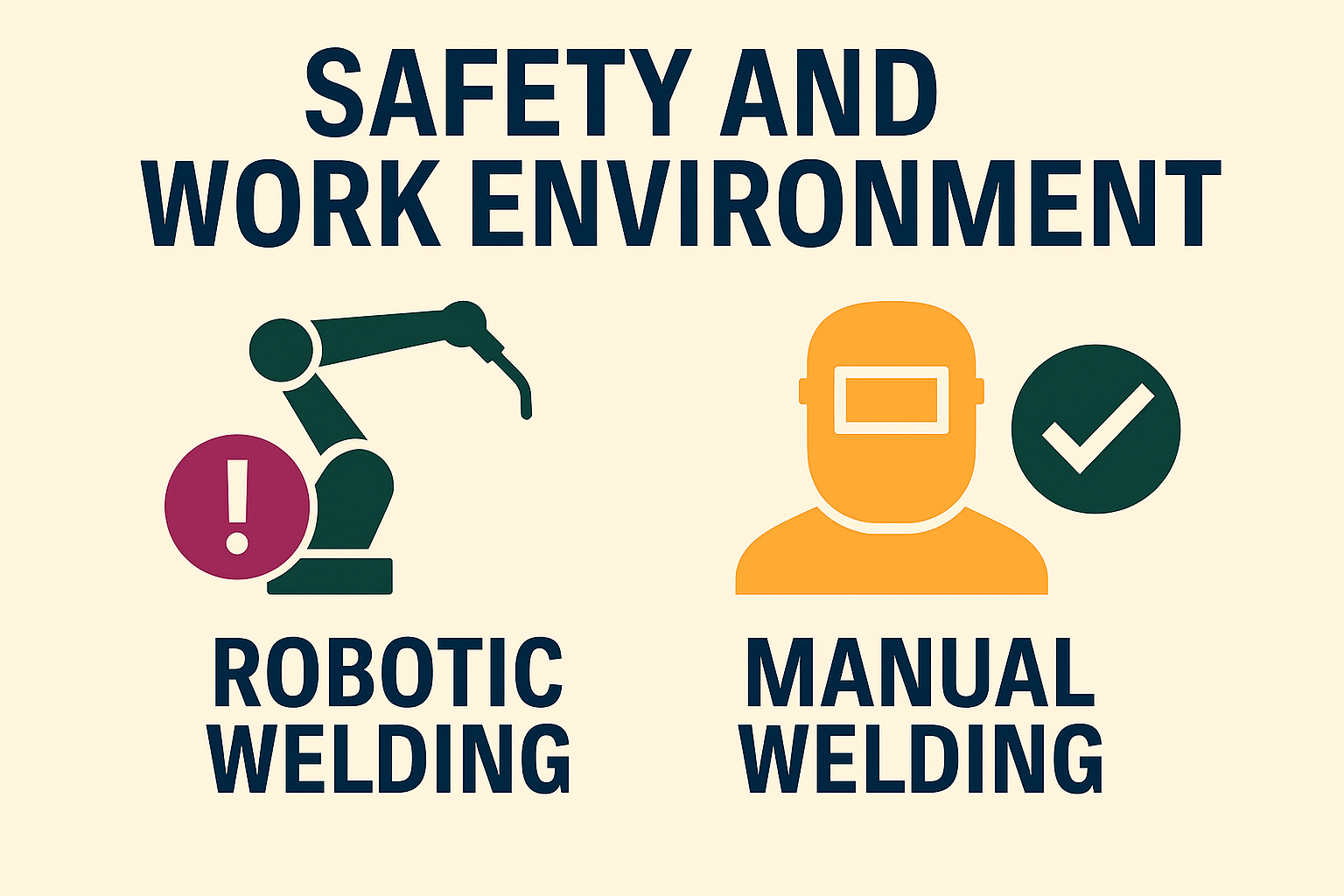
Robots help remove workers from hazardous environments, reducing exposure to:
- Toxic weld fumes
- Bright arc flash
- Heat
- Repetitive stress injuries
A well-designed robotic cell can dramatically improve workplace safety and compliance.
Manual Welding
Skilled welders can work safely, but the job involves inherent risks. Even the best PPE cannot eliminate exposure to heat, smoke, and ergonomic strain.
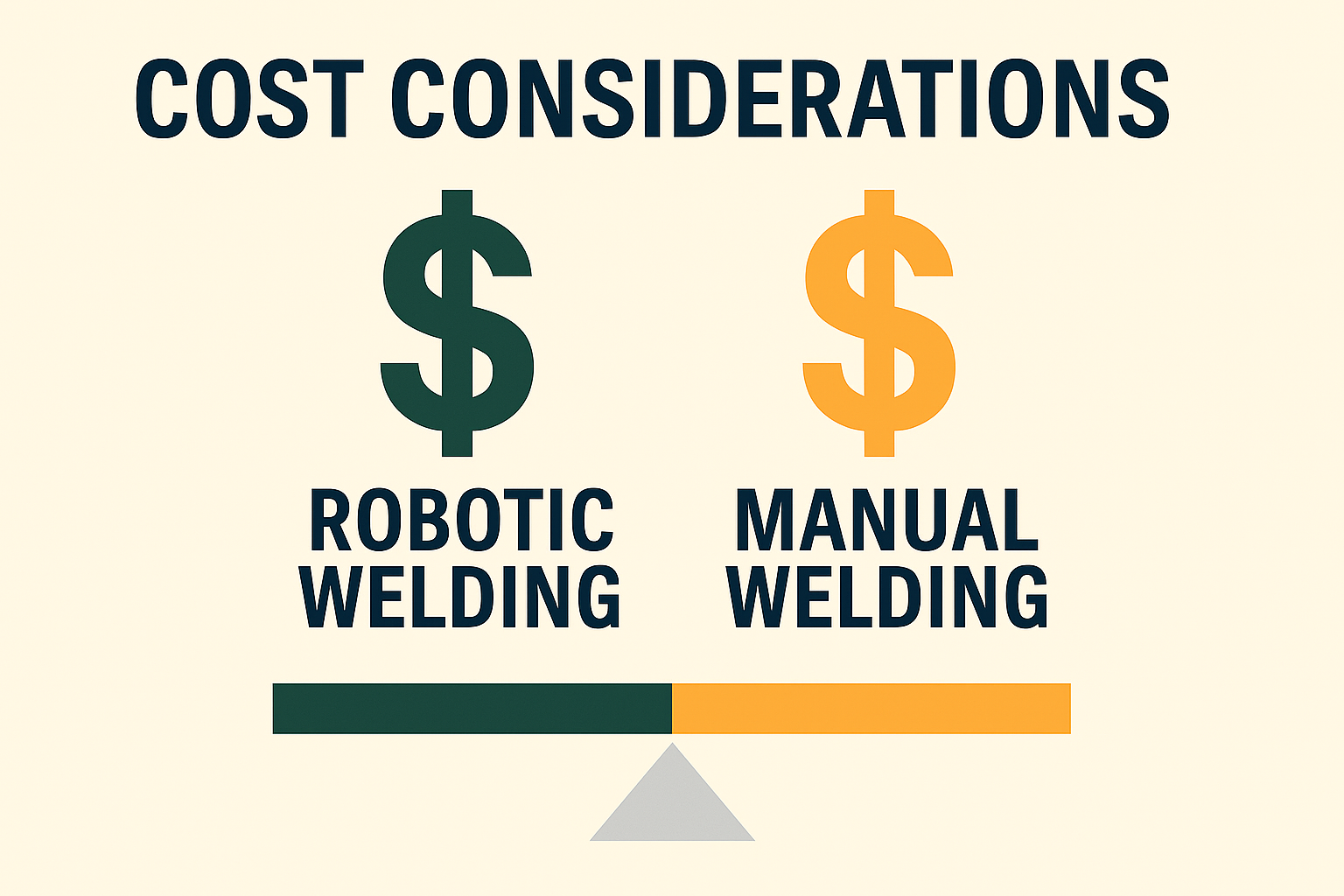
5. Cost Considerations
Robotic Welding
Initial investment: Typically $125,000–$250,000+ for a complete production robotic welding cell
Operating costs: Lower labor but higher maintenance and programming needs
ROI: Often achieved in 6–24 months depending on part volume, labor rates, and machine utilization
Robotic welding becomes more cost-effective as volume increases.
Manual Welding
Initial investment: Much lower—welders, booths, ventilation
Operating costs: Higher recurring labor costs
ROI: Immediate, but long‑term scalability is limited without automation
6. Part and Process Fit
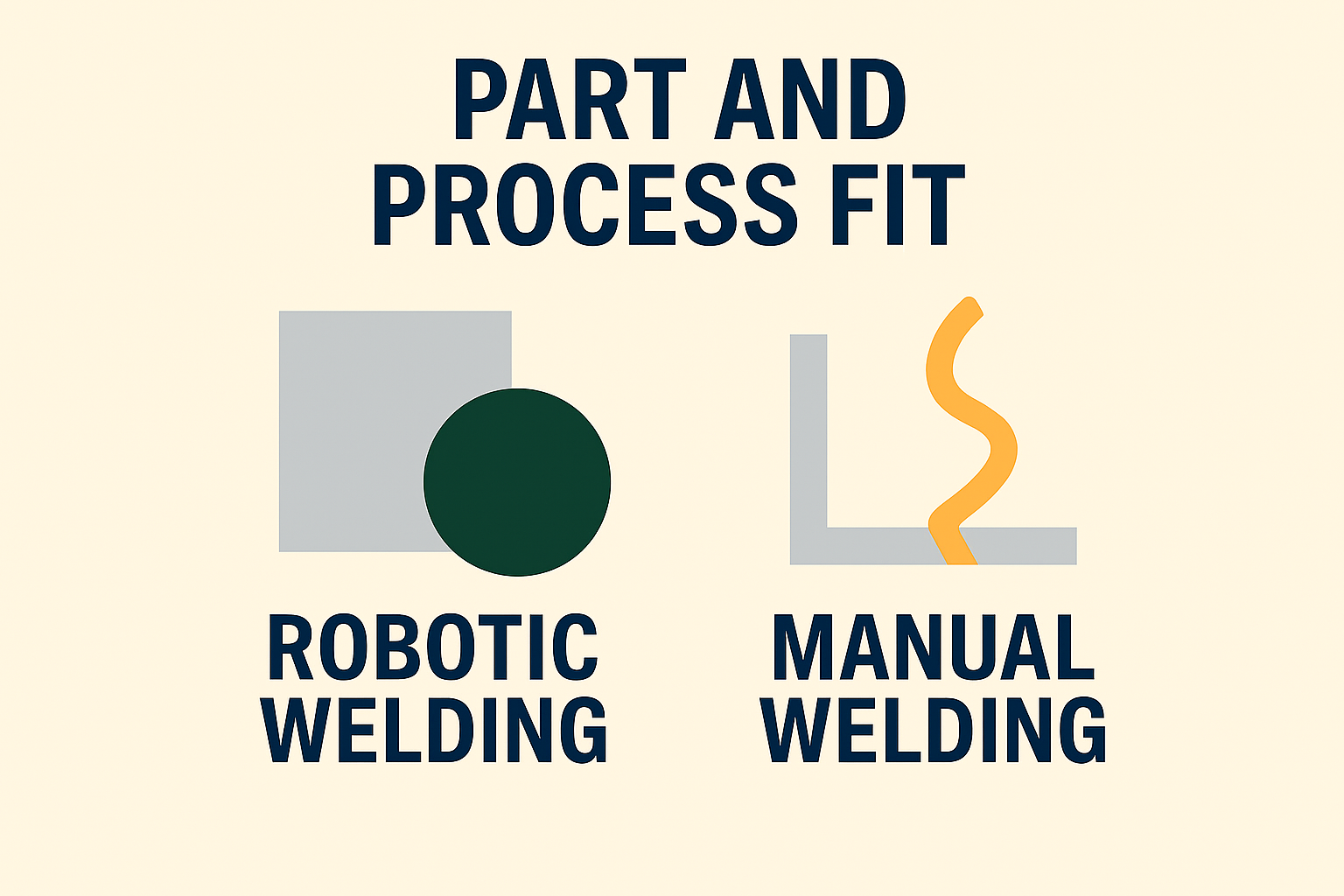
Robotic Welding Works Best When:
- Parts are repeatable and consistent, ideally laser cut and CNC press brake formed
- Volumes are medium to high
- Weld paths can be automated
- Fixtures are designed for accuracy and durability
Manual Welding Works Best When:
- Parts vary frequently
- Production volumes are low
- Weld paths are difficult to program
- Fit-up is inconsistent
7. Hybrid Approach: What Most Shops Choose
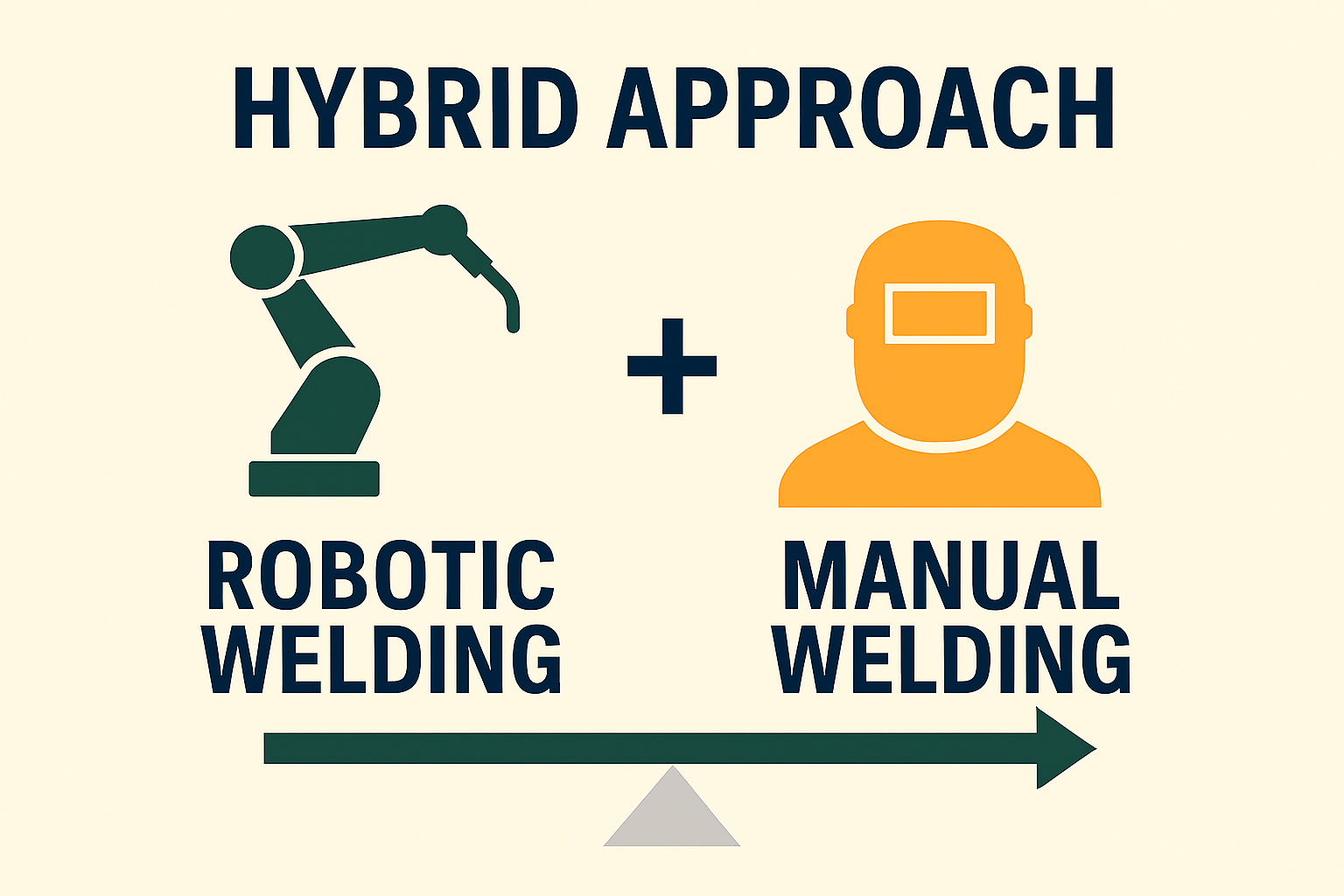
Most metal fabrication shops benefit from a hybrid welding strategy—robots handle predictable, high‑volume welds while skilled welders focus on complex or low‑volume work.
This balanced approach maximizes throughput, protects weld quality, and improves overall shop efficiency.
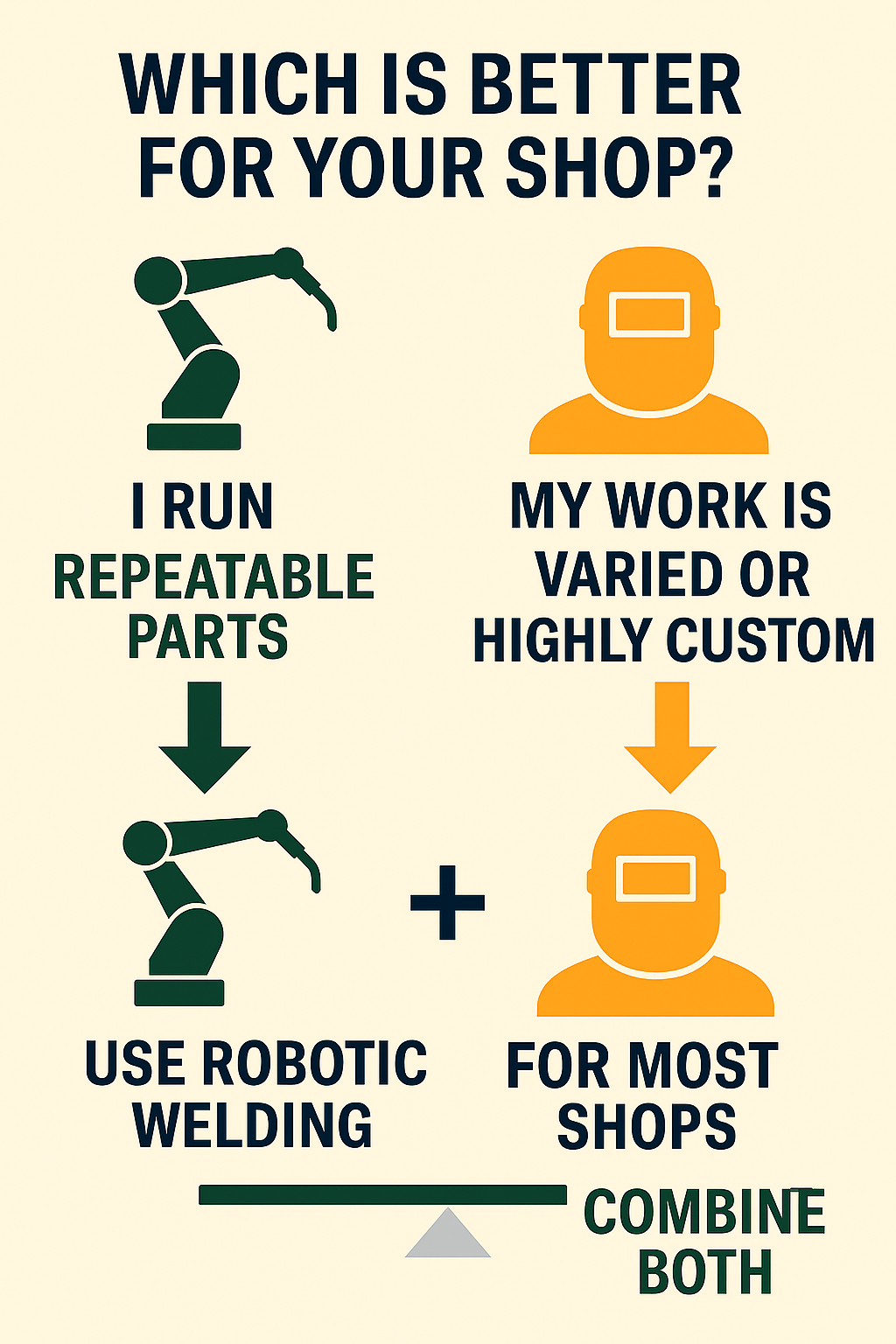
Conclusion: Which is Better for Your Shop?
There’s no one-size-fits-all answer. The right solution depends on your part mix, volume, labor availability, and quality requirements.
- If you run repeatable parts, robotic welding delivers unmatched productivity and consistency.
- If your work is varied or highly custom, manual welding remains essential.
- And for most shops, combining both gives the best results.
If you’re evaluating robotic welding, an experienced robotic welding integrator can put together a custom analysis of cycle times, ROI, and cell configuration options—you’ll need to share welding drawings with a list of joint types, weld sizes and lengths. Production requirements including estimated annual usage amounts helps keep the focus on welding work that needs to be prioritized using the 80/20 rule. Solid CAD models are also helpful to communicate weld requirements on assemblies with internal welds and/or welds on multiple sides.
Where to go for help? KC Robotics can help you automate your welding process with robotic welding.